Castaway, the 2000 survival drama directed by Robert Zemeckis and featuring Tom Hanks, remains a touchstone for fans of intense survival narratives. Its gripping portrayal of a FedEx executive stranded on a deserted island has captivated audiences worldwide.
But, is Castaway based on a true story? In this comprehensive exploration, we delve into the origins of the film, uncovering the real-life inspirations and creative decisions that shaped this unforgettable movie.
The Fictional Tale of Castaway
Plot Summary
Castaway introduces us to Chuck Noland (Tom Hanks), a dedicated FedEx executive whose life takes a dramatic turn when his plane crashes in the South Pacific. Chuck washes ashore a remote island, where he must confront the harsh realities of isolation and survival. The film meticulously depicts his struggle against the elements, his battle with loneliness, and his ultimate quest to escape the island and return to his former life.
The film’s narrative unfolds over several years, capturing Chuck’s transformation from a well-groomed corporate worker to a rugged survivor. His days are marked by the relentless search for food, shelter, and ways to signal for rescue. The emotional core of the film lies in Chuck’s relationship with Wilson, a volleyball he anthropomorphizes to stave off loneliness. Through this relationship, the film explores the depths of human resilience and the profound impact of isolation.
Screenplay and Concept
The screenplay for Castaway was crafted by William Broyles Jr., whose ambition was to create an authentic portrayal of survival. Broyles Jr. set out with a clear vision: to depict a solitary struggle for survival with as much realism as possible. This commitment to authenticity is evident throughout the film, from the meticulous detail in Chuck’s daily routines to the emotional depth of his interactions with Wilson.
The original concept for the film was developed by Broyles Jr. and refined through extensive research and personal experience. The screenplay reflects a deep understanding of the psychological and physical challenges faced by individuals in extreme isolation. Broyles Jr.’s dedication to crafting a believable narrative is a testament to the film’s lasting impact and relevance.
Confirmation of Fictional Origins
While Castaway is widely regarded as a masterful work of fiction, it is not based on any specific true story. The narrative is a product of creative imagination and meticulous research. The filmmakers have confirmed that there is no real-life individual whose experiences directly inspired Chuck Noland’s journey. Instead, the film draws upon a broad spectrum of survival accounts and creative storytelling to build its narrative.
Despite its fictional roots, Castaway resonates with viewers because it captures universal themes of endurance and hope. The film’s realistic portrayal of survival scenarios, combined with Tom Hanks’ powerful performance, creates an experience that feels both authentic and emotionally compelling.

Inspiration from Real-Life Survival Stories
Research and Real-Life Accounts
Although Castaway is not based on a specific true story, the screenplay draws inspiration from various real-life survival accounts. William Broyles Jr. conducted extensive research into historical and contemporary survival stories to ensure that the film’s depiction of survival was credible. These accounts include tales of shipwrecked sailors, stranded explorers, and individuals who have endured extreme isolation.
Broyles Jr.’s research focused on understanding the physical and psychological challenges faced by survivors in similar situations. This research informed many aspects of the film, from the practical survival techniques depicted to the emotional struggles experienced by Chuck Noland. By grounding the screenplay in real-life experiences, Broyles Jr. was able to create a narrative that feels both believable and compelling.
William Broyles Jr.’s Personal Experience
To deepen his understanding of survival, William Broyles Jr. undertook a personal experiment that mirrored Chuck Noland’s experiences. He isolated himself on a remote island in the Gulf of California, where he faced many of the challenges depicted in the film. During this time, Broyles Jr. engaged in activities such as spearing stingrays, drinking coconut juice, and building a shelter from bamboo and palm leaves.
This firsthand experience provided Broyles Jr. with valuable insights into the realities of survival. It also allowed him to infuse the screenplay with authentic details and emotions. His time on the island was instrumental in shaping the film’s realistic portrayal of isolation and survival.
Integration of Real-Life Survival Techniques
The survival techniques showcased in Castaway are a blend of real-life practices and creative storytelling. For instance, the methods Chuck uses to catch fish, build shelter, and create fire are grounded in actual survival techniques. These elements were carefully researched and incorporated into the film to enhance its authenticity.
The film’s attention to detail extends to the depiction of Chuck’s daily routines and struggles. From crafting makeshift tools to navigating the challenges of a limited food supply, Castaway provides a realistic portrayal of the resourcefulness required for survival. This commitment to accuracy contributes to the film’s enduring appeal and credibility.
Tom Hanks’ Transformative Journey
Physical Transformation for the Role
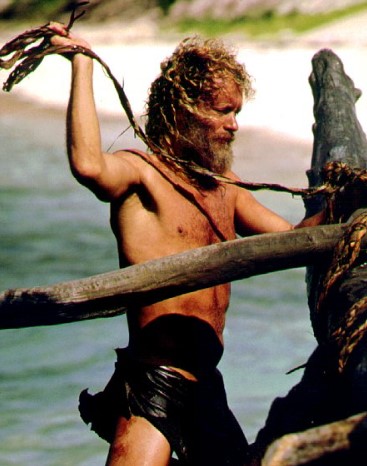
Tom Hanks’ portrayal of Chuck Noland is marked by a remarkable physical transformation. To convincingly depict the character’s journey from a well-fed executive to a gaunt survivor, Hanks underwent a dramatic weight change. He gained 50 pounds before filming began to represent Chuck’s pre-island appearance and then lost the same amount during production to reflect the physical toll of his ordeal.
This transformation was a testament to Hanks’ dedication to the role and his commitment to authenticity. The visual changes in Hanks’ appearance serve to underscore the hardships faced by Chuck Noland and enhance the film’s portrayal of survival. Hanks’ physical journey is a key element in creating a believable and impactful performance.
Method Acting and Preparation
In addition to his physical transformation, Tom Hanks employed method acting techniques to immerse himself in the role of Chuck Noland. He studied survival skills, including building fires and foraging for food, to ensure that his portrayal was grounded in reality. Hanks’ preparation also involved understanding the psychological impact of isolation and how it would affect Chuck’s behavior and emotions.
Hanks’ approach to the role was meticulous and immersive, reflecting his dedication to delivering a compelling and authentic performance. His preparation and commitment were crucial in bringing Chuck Noland to life and contributing to the film’s emotional depth.
Impact on Audience Perception
Tom Hanks’ transformation and performance had a significant impact on how audiences perceived Castaway. His physical changes and method acting lent credibility to the character’s struggle and fostered a deep connection with viewers. Hanks’ portrayal of Chuck Noland became one of the film’s most memorable aspects, contributing to its critical acclaim and commercial success.
The authenticity of Hanks’ performance helped to underscore the film’s themes of resilience and survival. His ability to convey the physical and emotional challenges faced by Chuck Noland resonated with audiences and reinforced the film’s impact.
See Also:- Is Lauren Bell Related to Ian Bell? Everything You Need to Know About Lauren Bell and Ian Bell
Production Challenges and Filming Locations
Challenges Faced During Production
The production of Castaway was marked by several significant challenges. One of the most notable was the decision to halt filming for a year to allow Tom Hanks to undergo his physical transformation. This break was essential for ensuring that Hanks’ appearance accurately reflected the character’s journey from the beginning to the end of the film.
The production team also faced logistical challenges related to filming on remote locations. Coordinating the various elements required for a realistic portrayal of a deserted island demanded careful planning and execution. Despite these challenges, the film’s production was successful in creating an authentic and compelling depiction of survival.
Filming Locations
Castaway was filmed in multiple locations to create the illusion of a single, isolated island. Monuriki Island in Fiji served as the primary location for the island scenes, providing a picturesque and realistic setting for Chuck Noland’s survival journey. The natural beauty of Monuriki Island contributed to the film’s visual impact and authenticity.
In addition to Fiji, Canadian beaches in British Columbia were used to film certain scenes. These diverse locations helped to create a cohesive and believable setting for the film. The choice of locations played a crucial role in achieving the film’s realistic portrayal of a deserted island.
Logistics and Coordination
The logistics of filming Castaway involved careful coordination between various locations and production elements. The team had to manage the complexities of shooting on remote islands, including transporting equipment and coordinating with local authorities. The successful execution of these logistical challenges was essential for creating the film’s immersive and realistic setting.
The production team’s efforts ensured that the film’s portrayal of survival and isolation was both believable and engaging. The attention to detail in the filming locations and logistics contributed to the overall success of Castaway.
The Iconic Wilson
The Creation of Wilson
One of the most memorable elements of Castaway is Wilson, the volleyball that becomes Chuck Noland’s companion during his time on the island. Wilson is not just a prop; it plays a pivotal role in the film’s emotional narrative. The idea for Wilson emerged spontaneously during the filming process, but it quickly became an integral part of the story.
Wilson was initially a real volleyball found on the set. The crew noticed its distinctive red handprint, which, when combined with the character’s need for companionship, led to the creation of Wilson’s face. The volleyball’s design, featuring a simple face drawn in red, became a powerful symbol of Chuck’s isolation and desperation for human connection.
Wilson’s Role in the Film
Wilson’s role in Castaway extends beyond being a mere object; it becomes a central figure in Chuck Noland’s life. The volleyball serves as a surrogate for human interaction, providing Chuck with a semblance of companionship and a means to express his emotions. The relationship between Chuck and Wilson evolves over time, reflecting Chuck’s growing sense of isolation and his desperate attempts to cope with his situation.
Throughout the film, Wilson becomes a confidant and a symbol of hope for Chuck. The moments of interaction between Chuck and Wilson highlight the profound impact of isolation on the human psyche. The volleyball’s presence serves as a reminder of Chuck’s humanity and his need for connection, even in the face of adversity.

The Legacy of Wilson
Wilson’s impact on Castaway extends beyond the film itself. The character of Wilson has become an iconic symbol of the film’s themes and has left a lasting impression on audiences. The volleyball’s role in the story has been widely discussed and analyzed, and it has become a recognizable element of the film’s legacy.
The enduring popularity of Wilson reflects the film’s ability to resonate with viewers on an emotional level. The volleyball’s simple yet profound role in the story underscores the film’s exploration of loneliness and human resilience. Wilson remains a powerful representation of the film’s themes and a memorable part of its cultural impact.
Critical Acclaim and Legacy
Reception at Release
Upon its release in December 2000, Castaway received widespread critical acclaim for its storytelling, Tom Hanks’ performance, and Robert Zemeckis’ direction. Critics praised the film for its emotional depth and realistic portrayal of survival. Tom Hanks’ transformative performance was particularly highlighted, with many reviewers noting his dedication to the role and the authenticity of his portrayal.
The film’s depiction of isolation and survival resonated with audiences and critics alike. Castaway was recognized for its ability to capture the human experience in extreme circumstances and for its exploration of themes such as resilience, hope, and the will to survive. The film’s success was reflected in its positive reviews and its strong performance at the box office.
Read Also:- Stray Kids New Album Release Date, When is Stray Kids New Album Coming Out?