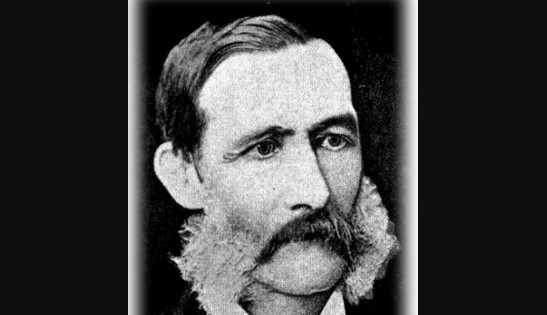
Dietrich Brandis is remembered as one of the most important figures in the history of forestry. Born in Germany in 1824, he later became known as the “Father of Tropical Forestry” because of his pioneering work in India and Burma. At a time when forests were being cut down without any plan, Brandis introduced scientific methods to protect and manage them. His ideas shaped not only India’s forest laws but also influenced forestry practices in Europe and America.
Brandis’s career was not just about trees, but it was about people, communities, and the balance between nature and human needs. He believed forests were more than just timber; they were living systems that needed care. His work laid the foundation for modern conservation, and even today, his principles are studied by forestry students around the world.
Dietrich Brandis Career, Age, Death, Family, BIO
| Attribute | Details |
|---|---|
| Full Name | Sir Dietrich Brandis |
| Born | 31 March 1824, Bonn, Germany |
| Died | 28 May 1907, Bonn, Germany |
| Nationality | German |
| Occupation | Botanist, Forester, Administrator |
| Known As | Father of Tropical Forestry |
| Education | Studied natural sciences at Copenhagen, Göttingen, and Bonn Universities |
| Academic Career | Lecturer in botany and phytochemistry at Bonn University (1849) |
| Major Appointment | Superintendent of Pegu Teak Forests, Burma (1856) |
| Key Role | First Inspector General of Forests in India (1864–1883) |
| Institutions Founded | Imperial Forest Service; Imperial Forest School, Dehradun (1878) |
| Major Works | Forest Flora of North-West and Central India (1874); Indian Trees (1906) |
| Honours | Fellow of the Royal Society (1875); Knight Commander of the Order of the Indian Empire (1887) |
| Global Influence | Mentor to Gifford Pinchot and Henry Graves, shaping U.S. Forest Service |
| Family | Married twice; father of six children; grandson Henning Brandis became a microbiologist |
| Wikipedia | @Dietrich_Brandis |
Early Life and Academic Roots
Dietrich was born on 31 March 1824 in Bonn, Germany. His father, Christian August Brandis, was a well-known philosopher and professor, which meant young Dietrich grew up in an intellectual environment. Surrounded by books and ideas, he developed a love for learning early in life. This background gave him the discipline and curiosity that later defined his career.
He studied at universities in Copenhagen, Göttingen, and Bonn, focusing on natural sciences. By 1849, he had become a lecturer in botany and phytochemistry at Bonn University. His early research was on plant geography and physiology, which gave him a strong scientific base. Unlike many of his contemporaries, Brandis believed in careful observation and data collection.
Botanical Training and Early Career
Brandis’s training as a botanist shaped his approach to forestry. He was not just interested in trees as resources but studied them as living organisms. He learned how plants grew, how they interacted with soil and climate, and how ecosystems functioned. This scientific outlook was rare in the mid-19th century, when most forest management was about cutting and selling timber.
In 1849, he began teaching at Bonn, where he shared his knowledge of plant chemistry and physiology. He also published papers on plant taxonomy, which showed his ability to classify and understand species. These skills became crucial when he moved to Asia, where he encountered tropical forests very different from the European ones he had studied.
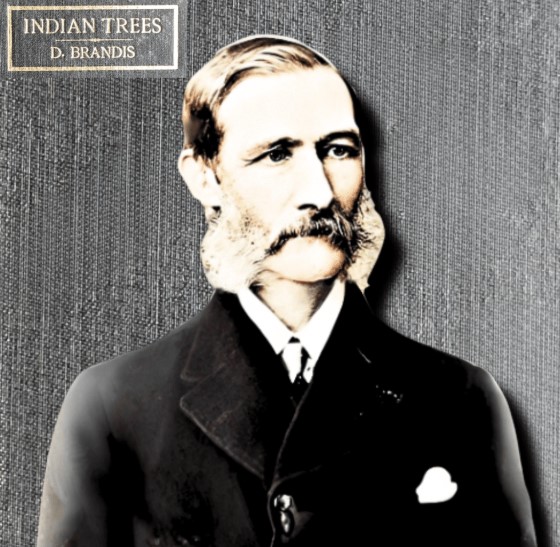
Journey to Burma: The Teak Forests Challenge
Dietrich Brandis was named Superintendent of Pegu, Burma’s teak woods, in 1856. This was a turning point in his career. At that time, teak was one of the most valuable timbers in Asia, used for shipbuilding and construction. But the forests were being cut without any plan, leading to rapid depletion. Brandis was sent to bring order to this chaos.
He introduced scientific methods to manage the teak forests. Instead of cutting trees randomly, he insisted on surveys, records, and planned felling. He promoted techniques like girdling, which allowed trees to dry before being harvested, making the timber stronger. He also worked on fire control and selective cutting, ensuring that young trees had space to grow.
See Also:- Wish Bone
Rise as Inspector General of Forests in India
Brandis was named India’s first Inspector General of Forests in 1864. This was a huge responsibility, as India had vast forests spread across different regions. His task was to create a system to manage them scientifically.
One of his first steps was to establish the Imperial Forest Service. He recruited and trained officers, both European and Indian, to manage forests professionally. To support this, he founded the Imperial Forest School at Dehradun in 1878. This institution became the backbone of forestry education in India and trained generations of foresters.
The Indian Forest Act of 1878
One of Brandis’s most lasting contributions was the Indian Forest Act of 1878. This law gave the government authority to classify forests into three categories: reserved, protected, and village forests. Reserved forests were strictly controlled, protected forests had limited use, and village forests were meant for local communities.
The Act was important because it created a legal framework for forest management. It introduced rules against illegal cutting and set penalties for violations. At the same time, it tried to balance conservation with the needs of villagers who depended on forests for fuel, fodder, and small timber.
Scientific Contributions and Publications
Dietrich Brandis was not only a forest administrator but also a scientist who left behind valuable writings. His most famous book, Forest Flora of North-West and Central India (1874), documented hundreds of plant species with detailed notes. Later, in 1906, he published Indian Trees, which described more than 4,400 species. This book became a reference for botanists and foresters worldwide.
Brandis believed that science should guide forestry. He collected herbarium specimens, studied plant physiology, and wrote about silviculture — the science of growing and managing forests. His work helped people understand that forests were complex ecosystems, not just sources of timber. Even today, his books are considered classics in forestry education.
Relationship with Local Communities
Brandis understood that forests were deeply connected to the lives of local people. In Burma, he supported the “taungya” system, where villagers grew crops alongside teak plantations. This method gave farmers food while helping forests regenerate. It was one of the earliest examples of agroforestry, a practice that is still used today.
In India, Brandis studied sacred groves — patches of forest protected by local traditions. He documented these groves in places like Coorg, Mysore, and Rajputana. He saw them as proof that communities had their own ways of conserving nature. However, his policies sometimes created tension, as villagers felt restricted by forest laws.
Retirement and Death
Brandis retired in 1883 and returned to Bonn, Germany. Later, he lived in Kew, London, where he continued his research and writing. Even in retirement, he remained active, corresponding with foresters and scientists across the world. At the age of 75, he published Indian Trees, proving his lifelong dedication to forestry.
He passed away on 28 May 1907 in Bonn. By then, he had already earned global respect as a pioneer of tropical forestry. His legacy lived on through his writings, his students, and the institutions he helped build.
Read Also:- George Symons