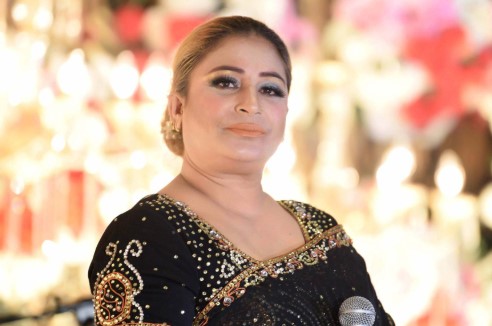
Naseebo Lal is a name that resonates deeply within the Pakistani music industry. A powerhouse of talent, she has carved a niche for herself with her soulful voice, dynamic performances, and an unwavering passion for music. Born into a family of musicians, her journey from humble beginnings to becoming one of Pakistan’s most celebrated folk singers is nothing short of inspiring.
Her music transcends borders, touching the hearts of audiences across Pakistan, India, and beyond. With a career spanning decades, Naseebo has mastered the art of blending traditional folk melodies with contemporary sounds, making her a beloved figure in the industry. Whether it’s her electrifying performances on Coke Studio or her timeless folk songs, she continues to captivate listeners with her raw, emotive singing style.
Beyond her musical achievements, Lal’s life story is one of resilience, determination, and cultural significance. From performing at local fairs to gracing international stages, her journey is a testament to the power of perseverance and passion. This article delves deep into her life, career, family, and legacy, offering readers a detailed and insightful look into the world of Naseebo.
Early Life & Family Background
Naseebo was born on January 10, 1970, in Chishtian, Pakistan. Her early years were shaped by the rich musical traditions of her family, who had deep roots in Rajasthani folk music. Despite facing financial hardships, her family remained committed to their musical heritage, performing at weddings, fairs, and cultural events. Her current age is 55 years as of 2025.
Growing up in a household where music was a way of life, Naseebo was naturally drawn to singing. Her mother, Babli, was her first music teacher, instilling in her the fundamentals of folk singing and vocal techniques. This early exposure to music played a crucial role in shaping her future career.
Family Origins & Migration
Lal’s family originally hailed from Rajasthan, India, but migrated to Pakistan after the partition of India in 1947. The migration was a turning point for her family, as they had to rebuild their lives in a new country while preserving their musical traditions. Despite the challenges, they continued to perform at local events, keeping their Rajasthani folk heritage alive.
Her family’s deep connection to music was evident in the careers of her siblings. Her brothers, Shahid Lal and Tabedar Lal, and sisters, Sheena Lal and Farah Lal, all pursued singing, making music a family legacy. Being surrounded by musicians, Naseebo developed a profound love for singing from an early age.

Naseebo Lal Wiki | BIO
| Attribute | Details |
|---|---|
| Full Name | Naseebo Lal |
| Profession | Singer |
| Date of Birth | 10 January 1970 (Saturday) |
| Age (as of 2025) | 55 Years |
| Birthplace | Chishtian, Pakistan |
| Zodiac Sign | Capricorn |
| Nationality | Pakistani |
| Hometown | Chishtian, Pakistan |
| Educational Qualification | No formal education |
| Languages Sung | Punjabi, Urdu, Marwari, Pashto |
| Marital Status | Married |
| Husband | Naveed (musician) |
| Children | Son: Murad Hussain, Daughter: Noor Fatima (Laadi) |
| Parents | Father: Name Not Known, Mother: Babli |
| Siblings | Brothers: Shahid Lal, Tabedar Lal (Singers), Sisters: Sheena Lal, Farah Lal (Singers) |
| First Music Teacher | Babli (mother) |
| Formal Music Training | Ustaad Lal Khan, Ustaad Tafoo (tabla maestro) |
| Debut Song | Punjabi movie Desan Da Raja (1999) |
| Industry Recognition | Collaborations with Oriental Star Agencies (UK) |
| Net Worth | 10 crore PKR (Approx) |
| @naseebo_lalofficial/ | |
| Wikipedia | @Naseebo_Lal |
Education & Musical Training
Unlike many artists who undergo structured academic training, Naseebo never received formal education. Growing up in a family where music was the primary focus, her childhood revolved around learning melodies, vocal techniques, and stage presence rather than traditional schooling. Despite this, her deep understanding of music and ability to connect with audiences proved that talent and passion could outweigh formal education.
Lal’s first music teacher was her mother, Babli, who introduced her to the rich traditions of folk singing. Under her mother’s guidance, she learned the intricacies of vocal modulation, rhythm, and emotional expression—skills that would later define her unique singing style.
As she grew older, she sought formal training from renowned musicians. She trained under Ustaad Lal Khan, a respected figure in Pakistani classical music, and Ustaad Tafoo, a tabla maestro known for his contributions to Lollywood film music. Tafoo, famous for his song Sun Ve Balori Akh Walia from the 1970 movie Anwara, played a crucial role in refining Lal’s technical skills and stage presence.
Career Beginnings
Naseebo made her singing debut in 1999 with songs from the Punjabi movie Desan Da Raja. Produced by Sarvar, this film marked the beginning of her journey in the Lollywood film industry. Her powerful vocals quickly gained attention, leading to multiple offers from filmmakers and music producers.
Her talent wasn’t confined to Pakistan alone. After the success of her song Silli Silli Aundi Hawa—originally sung by Indian singer Hans Raj Hans—she caught the attention of Oriental Star Agencies in the UK. This opened doors for her to record music internationally, further expanding her reach.
Despite her growing popularity, Naseebo faced challenges in the industry. As a female folk singer, she had to overcome societal barriers and prove her worth in a male-dominated music scene. However, her determination, raw talent, and unique voice helped her carve a niche, earning her a loyal fan base.

Rise to Fame
Lal’s rise to fame was fueled by her powerful voice, emotional depth, and ability to connect with audiences. Her early performances in Lollywood films and traditional stage shows helped her gain recognition, but it was her unique singing style that truly set her apart.
Her first major breakthrough came when she performed at The Drum Theatre in Birmingham, England, in 2012. This international concert earned her global recognition, proving that her music could transcend borders. The event was a turning point in her career, solidifying her status as one of Pakistan’s most celebrated folk singers.
Influence on Pakistani Music
Lal’s contribution to Pakistani folk and traditional music is immense. She has played a crucial role in preserving and promoting cultural melodies, ensuring that folk music remains relevant in modern times. Her ability to blend classical techniques with contemporary sounds has made her a favorite among music lovers of all generations.
Her performances on Coke Studio further cemented her legacy. She appeared in Season 9 (2016), singing Groove Mera alongside Aima Baig and Young Stunners, and later in Season 14 (2022), where she performed Tu Jhoom with Abida Parveen. These performances showcased her versatility and ability to adapt to modern music trends.

See Also:- Asfar Hussain Wiki, Age, Girlfriend, Family, Biography & More
Collaborations & Concerts
Apart from her solo hits, Naseebo has collaborated with renowned Pakistani singers such as Nargis, Nisar Butt, Shabnam Chaudhry, Zubin Shah, and Nadia Ali. Her live performances are known for their energy, passion, and ability to captivate audiences.
Her music albums, including her collaborative album with her brother Shahid Lal in 2017, have been well-received by fans and critics alike.
Coke Studio Performances
Lal’s participation in Coke Studio marked a significant milestone in her career. Known for her raw, emotive singing style, she was introduced to a global audience through this platform, where she showcased her versatility and ability to adapt to modern music trends.
In Season 9 (2016), Naseebo performed Groove Mera alongside Aima Baig and Young Stunners. The song was a fusion of folk and contemporary beats, highlighting her ability to blend traditional melodies with modern rhythms. This performance was widely appreciated, earning her new fans across different age groups.
Her most iconic Coke Studio performance came in Season 14 (2022) when she sang Tu Jhoom with Abida Parveen. This song became an instant hit, resonating deeply with audiences due to its soulful lyrics and powerful vocal delivery. The collaboration between two legendary singers was celebrated as one of the best performances in Coke Studio history.

Controversies & Challenges
In 2021, Naseebo sang the official anthem for Pakistan Super League (PSL) 6, titled Groove Mera. While the song was a commercial success, it received mixed reactions from fans and critics. Some listeners criticized the composition, while others praised its unique fusion of folk and pop elements.
Despite the initial backlash, the anthem became widely popular, proving that Lal’s distinctive voice could make any song memorable and impactful.
Domestic Violence Allegations
In March 2025, reports surfaced that Naseebo had filed a domestic violence case against her husband, Naveed. The case was registered under Section 345 of the Pakistan Penal Code, which deals with assault or criminal force against women. However, later developments revealed that the couple had reconciled, and Naseebo withdrew the case.
Her brother, Shahid Lal, stated that minor disagreements between Naseebo and her husband were common, but this particular incident escalated beyond control. He assured the media that the couple had resolved their issues, and her husband had promised that such an incident would not happen again.

Husband & Kids
Naseebo is married to Naveed, a musician. Together, they have two children: son, Murad Hussain, and daughter, Noor Fatima (Laadi). Despite her busy career, she remains deeply connected to her family, often sharing moments with them on social media.
Outside of her musical career, Naseebo is known for her philanthropic efforts. In 2016, she announced plans to establish a music academy for underprivileged children, aiming to nurture young talent and provide opportunities for aspiring musicians.
She is also an active social media user, engaging with fans and sharing updates about her life and career.
Net Worth & Income
As of March 2025, Lal’s estimated net worth is around 10 crore PKR. Her financial success is a testament to her long-standing career, numerous hit songs, and live performances. Over the years, she has built a strong reputation in the Pakistani folk and film music industry, allowing her to secure multiple revenue streams. Her earnings come from live concerts, music album sales, film soundtracks, brand endorsements, and private events.
Additionally, her collaborations with renowned artists and international performances have contributed to her financial growth. Despite facing challenges in the industry, Naseebo has remained a dominant force in Pakistani music, proving that talent, perseverance, and adaptability can lead to sustained success.
Read Also:- Zanai Bhosle Wiki, Height, Age, Boyfriend, Family, Biography & More